
Recently, news stations and social media have been flooded with endless updates on a Dutch-flagged ship called MV Hondius. The topic of interest is around a strand of the Orthohantavirus called the Andes virus, which is a strand of the virus that can infect and spread between humans. The uproar of controversy is around the influencer Jake Rosmarin who posted a video blogging his life on the quarantined ship. In the video, he mentions missing his family. This has sparked a debating frenzy, where people argue if they should let the quarantine people dock or not. But what exactly is the Hanta Virus, when did it all start, and should we be preparing for the sequel to 2020? (CDC)
The orthohanta virus is a family of viruses that primarily affects rodents. When the virus infects their natural victims, it usually shows up as an asymptomatic, persistent infection in the host. However, in the rarer cases that it affects a human, an illness known as HFRS (hantavirus hemorrhagic fever with renal syndrome), which causes symptoms like headache, lower back pain, nausea, vomiting, diarrhea, and/or bloody stole, which usually appear within two weeks post contamination. While uncommon, the disease is still a cause for concern, as it is killing people in third-world countries. (WHO)
As for who started it, the “patient zero” is theorized to be a 70-year-old man named Leo Schilperoord (skill-purr-ord), a Dutch ornithologist, who began developing symptoms on April 6, just six days after boarding the ship. Dr. Schilperoord’s condition worsened, and after five days, his death was confirmed. Argentinian authorities believe that the man had inhaled particles from the feces of a long-tailed pygmy rat, which carry the Andes virus, during his visit to a junkyard in Argentina. His goal was to spot, study, and journal on the variation of bird species that feed near or in junkyards. (NY Post)
When it comes to the health of the general public, health authorities aren’t too concerned about the outbreak leading to a pandemic in any form. “The chance for broad spread in the U.S. is extremely unlikely,” says Dr J Lee Jenkins, an associate professor of Emergency Medicine at the Johns Hopkins University School of Medicine. In order to transfer the virus from human to human, both subjects would be required to share prolonged close contact. (Hopkin’s Medicine)
At the end of the day, research is important. While news stations do often tell the truth, the full picture is often missed, leading to loss of context or background information on the subject of conversation. Overall, this outbreak isn’t something anyone outside of the government, doctors, or relatives of the patients should be worrying about.
Categories:
Orthohantavirus
May 27, 2026
Date:??
CDC/ Cynthia Goldsmith, Luanne Elliott
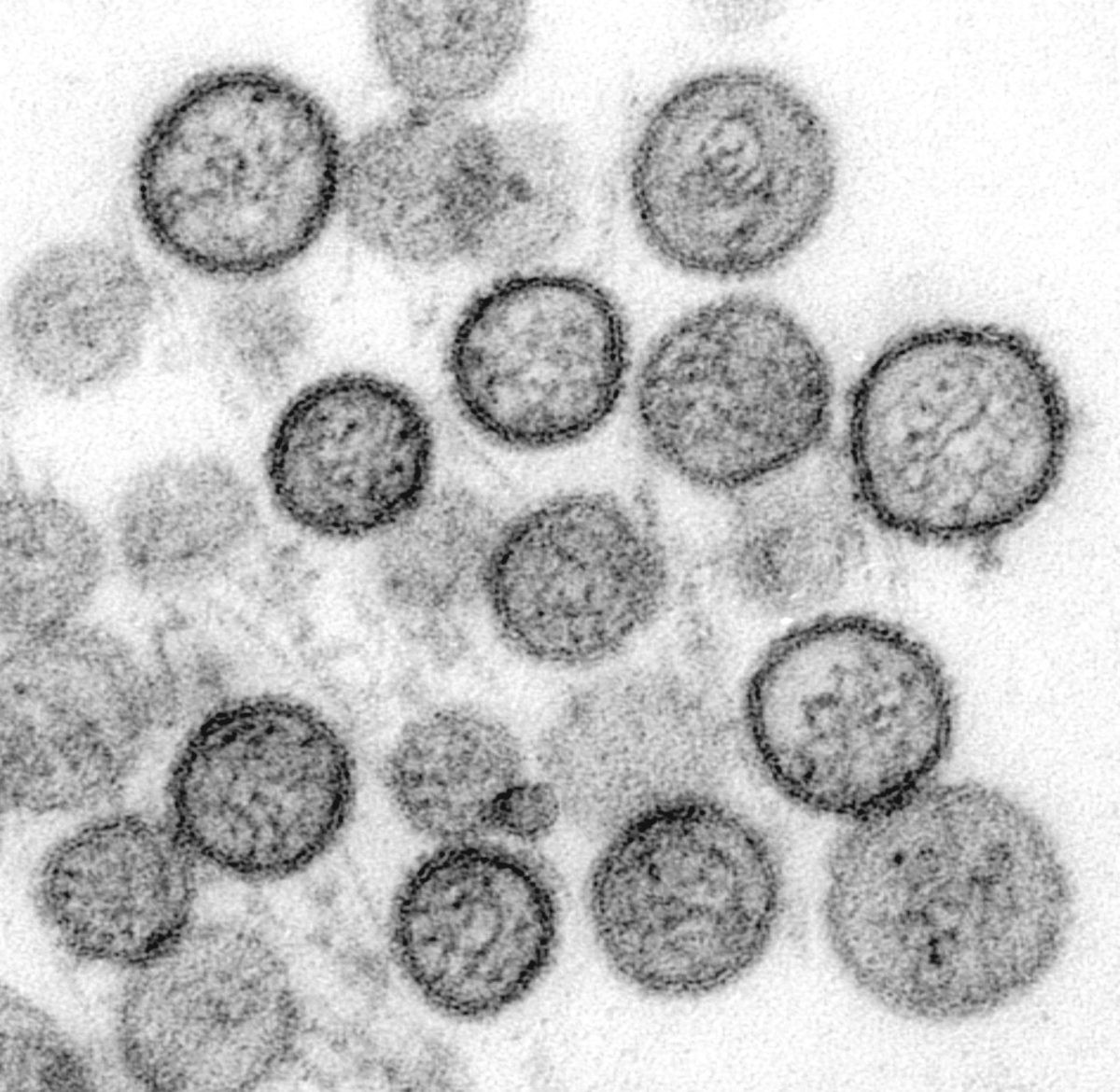
Transmission electron micrograph of Sin Nombre virus.
Transmission electron micrograph of Sin Nombre virus. Hantavirus.
More to Discover